

Deeply Forked Tail
Adults are about 5.9–7.5 inches long with an 11.4–12.6-inch wingspan and a distinctive forked silhouette.
Species identification, careful nest-status assessment, lawful prevention planning, and physical exclusion for San Diego homes and businesses.
Call (619) 421 - 2101Barn swallows often build mud-cup nests beneath eaves, porches, beams, and rafters. Their insect feeding is useful, but a nest over a doorway, walkway, loading area, or finished surface can create mud, droppings, noise, and access concerns.
Planning begins by identifying the bird and deciding whether the nest is being built, contains viable eggs or nestlings, supports dependent fledglings, or is inactive. That status—not the month alone—frames observation, temporary protection, cleanup, or future exclusion.
GC Termite Control evaluates activity at San Diego homes and businesses, emphasizing lawful timing and complete physical exclusion rather than chemicals or guaranteed removal.
Tell us where the nest is located and what activity you have observed.
Call (619) 421 - 2101 →Hirundo rustica is identified through appearance, flight, nest shape, and location—not mud alone.
Adults are about 5.9–7.5 inches long with an 11.4–12.6-inch wingspan and a distinctive forked silhouette.
Mud pellets, grass, hair, and feathers form an open cup attached to a sheltered vertical surface.
Barn swallows capture flies, beetles, and other flying insects over open areas.
Identification and nest status must be established before disturbance, removal, or exclusion is considered.
Both are protected, but their nests, tails, and social behavior differ. Identification guides the exclusion design.
A deeply forked tail, blue upperparts, and warm buff-to-rufous underparts are useful field marks. Barn swallows usually place an open mud-cup nest on beams, rafters, porches, eaves, or sheltered ledges.
Cliff swallows have a shorter, squarer tail and build enclosed, gourd-shaped mud nests. They often nest in colonies beneath eaves, bridges, culverts, or similar overhangs.
Barn swallows often produce one or two broods, but dates and development vary. Typical biological ranges help explain the cycle; field evidence determines current status.
Adults inspect sheltered attachment points near feeding areas. Mud and plant material form an open cup, sometimes over an old mud outline. Construction does not prove that eggs are present.
Barn swallows commonly lay three to seven eggs. Incubation generally lasts 12 to 17 days, with natural variation. The first viable egg changes the federal nest-status analysis.
Adults repeatedly deliver food while young remain in the nest. Disturbance at this stage can harm dependent birds and is not a routine control option.
Young commonly spend 15 to 27 days as nestlings. First flight does not prove independence; fledglings may return while adults continue care.
A nest becomes federally inactive after viable eggs and nestlings are absent and fledglings no longer depend on it. Lawful cleanup and exclusion can then be evaluated.
Life-history ranges: Cornell Lab of Ornithology Barn Swallow guide .
Official sources use overlapping ranges because nesting responds to species, location, weather, and the individual birds. A date can prompt inspection; it cannot prove that a nest is empty or lawful to disturb.
USFWS describes this as the general swallow breeding period. It is natural-history guidance, not a guaranteed start or finish date.
CDFW calls this typical for many California birds while warning that timing varies and some birds nest in every month.
California's bird-control handbook uses this conservative swallow-planning period. It is not a statutory removal window.
Planning-window source: California Vertebrate Pest Control Handbook: Birds .
No universal legal removal season: an in-use nest remains protected regardless of date. Field evidence and current requirements take priority.
USFWS defines an in-use nest as one with viable eggs or nestlings, continuing until fledglings no longer depend on it. Other protections may apply even when inactive.
Federal guidance classifies a pre-egg nest as inactive. California and local restrictions may still apply, so status and proposed work must be verified before disturbance.
The nest is in use. Do not remove it, cover it, block access, or install exclusion that could take birds, eggs, or young without applicable authorization.
First flight is not proof of independence. Young may return for several weeks and continue receiving care, so status must be observed rather than assumed.
Federal authorization may not be required to destroy an inactive nest when no one retains it or its contents. Other laws still require review; relocating any nest requires federal authorization.
Barn swallows are federally and state protected. Destroying an in-use nest requires applicable MBTA authorization; relocating any nest requires federal authorization because it involves possession.
California Fish and Game Code section 3503 addresses taking, possessing, or needlessly destroying nests or eggs. GC Termite Control does not provide legal advice or promise permit approval. Unclear status should be referred to USFWS, CDFW, or a qualified wildlife biologist.
Review current USFWS activities that do not require a permitMud and droppings can be inconvenient, but inspection comes before disturbance.
Sheltered junctions provide an attachment surface, overhead cover, and flight access.
Framing beneath roofs or canopies can support an open mud cup near feeding areas.
Nests can concentrate droppings, feathers, and mud where people pass.
Activity may conflict with sanitation or operations, but those concerns do not override protections.
Mud, feathers, and debris can collect near drainage components.
Mud outlines, droppings, and staining can remain after use.
For an in-use nest, protect the area below it, redirect foot traffic when feasible, and avoid disturbance until nesting has ended.
Do not block flight access or touch the nest.
Pause when eggs, young, feeding visits, fledglings, or uncertain identification are present. Observe from a suitable distance and seek expert guidance when needed.
A date or quiet hour does not prove inactivity.
After status and legal requirements are resolved, prepare the surface and install a barrier that closes the complete nesting corner.
Prevention works best before birds recommit to the site.
Exclusion should cover the complete nesting corner and occur before use or after lawful inactivity is confirmed.
Fitted panels can remove the sheltered corner or rough surface needed for a mud-cup nest. Compatible materials are selected for the architecture.
Plan around: Edges must not leave another shelf or trap birds behind the material.
A correctly selected barrier can deny access beneath an eave, canopy, loading area, or structural recess.
Plan around: Mesh size, tension, perimeter closure, access, and maintenance must prevent gaps or entrapment.
Custom screening can protect a full beam-to-wall junction instead of only the old nest outline.
Plan around: Partial coverage may shift construction to the next protected corner.
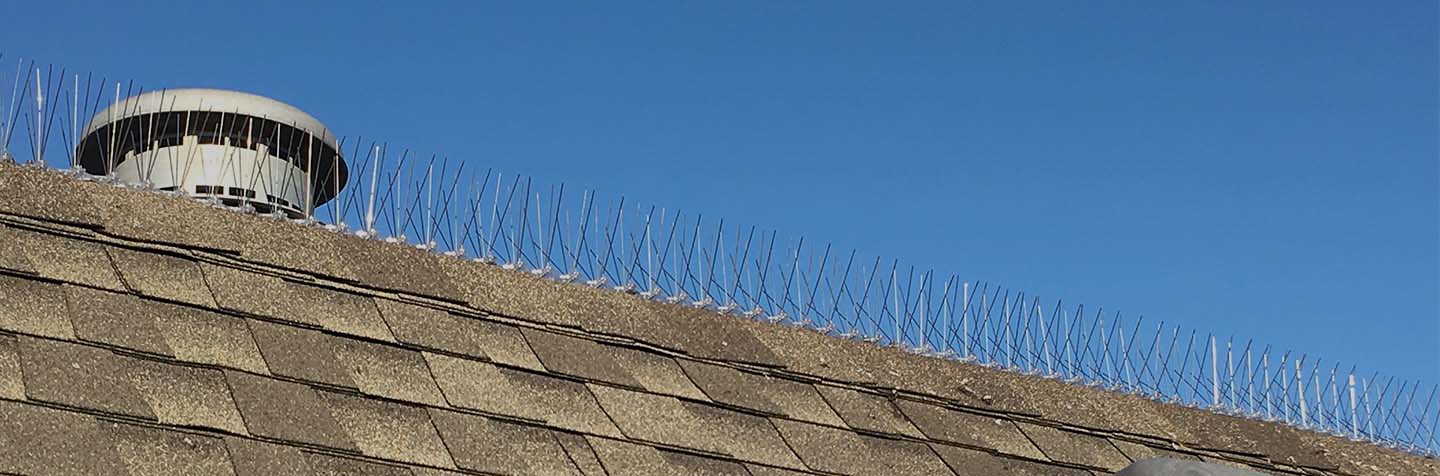
Spikes or wire may discourage landing on suitable ledges, but they are not a universal solution for cup nests beneath overhangs.
Plan around: Geometry, nearby surfaces, debris, and maintenance determine whether they help.
Alarm calls or visual tools may sometimes interrupt early construction in suitable settings.
Plan around: Birds may habituate, and these tools never make an in-use nest removable.
USFWS says repellents are ineffective and no EPA-registered toxicants control swallows. Prevention relies on lawful timing, physical exclusion, and monitoring.
Mud, feathers, and nest material can hide attachment conditions. Debris beneath an in-use nest may be managed by protecting the surface below, without disturbing the nest or blocking access.
After lawful clearance, cleanup depends on accumulation, surface, access, and exposure. Avoid dry sweeping or uncontrolled pressure washing. Extensive contamination may require specialized remediation.
Review observations, distinguish barn from cliff swallows, photograph evidence, and measure affected surfaces.
Observe construction, adult visits, eggs, nestlings, fledglings, and signs of dependency without causing disturbance.
Compare status, timing, location, and requested work with current federal, California, and local requirements.
When work is appropriate, complete bird-specific cleanup and install exclusion without trapping birds or leaving an adjacent gap.
Inspect attachments and nearby surfaces, then refine protection when new activity reveals an uncovered opportunity.
Barn swallows may reuse nests or mud traces. Prevention focuses on the attachment area, not eliminating their habitat across a property.
Inspect known sites early enough to repair or install barriers before birds begin using them.
After inactivity and requirements are confirmed, remove appropriate residual mud without retaining or relocating the nest.
Cover the full corner, beam junction, or recess rather than only last year's nest outline.
Check panels, mesh, anchors, seams, and edges for gaps, damage, looseness, or debris.
Swallows may test another beam or corner after a preferred site is blocked.
Record prior nest locations so future inspection and prevention can be planned consistently.
Yes. Federal and California protections apply. Identification, nest status, proposed work, and current requirements must be evaluated before disturbance or exclusion.
USFWS describes March through September generally; California sources use overlapping ranges. These are planning guides, not removal permission.
Federal guidance considers a pre-egg nest inactive, but status must be confirmed and California, local, and other protections reviewed first.
Not necessarily. Fledglings may return and remain dependent for several weeks. Wait for confirmed independence and resolve applicable requirements.
Federal authorization may not be required to destroy a confirmed inactive nest without retaining it. Relocation and other laws are different.
After lawful inactivity is confirmed, prepare the surface and install a complete physical barrier. Monitor nearby corners for new construction.
Review current primary sources before work that could affect a protected bird or nest.
Federal swallow biology, prevention, chemical limitations, and nest guidance.
U.S. Fish & Wildlife ServiceFederal definitions for in-use and inactive nests, destruction, and relocation.
California Department of Fish and WildlifeState guidance on variable nesting seasons and California protections.
California Legislative InformationCalifornia statutory language concerning bird nests and eggs.
Tell us what you are seeing and where. We can evaluate species clues, activity, nest status, affected surfaces, and lawful physical-exclusion options.