VA & FHA Approved · Termite & Pest Control · San Diego Versión en Español · Call Today (619) 421 - 2101
Ant control and extermination services in San Diego

Ant Control & Extermination Services

Target the ants you see and the colonies you do not with professional treatment and prevention solutions for San Diego properties.

Call (619) 421 - 2101
Versión en Español

Control the Colony, Not Just the Ants You See

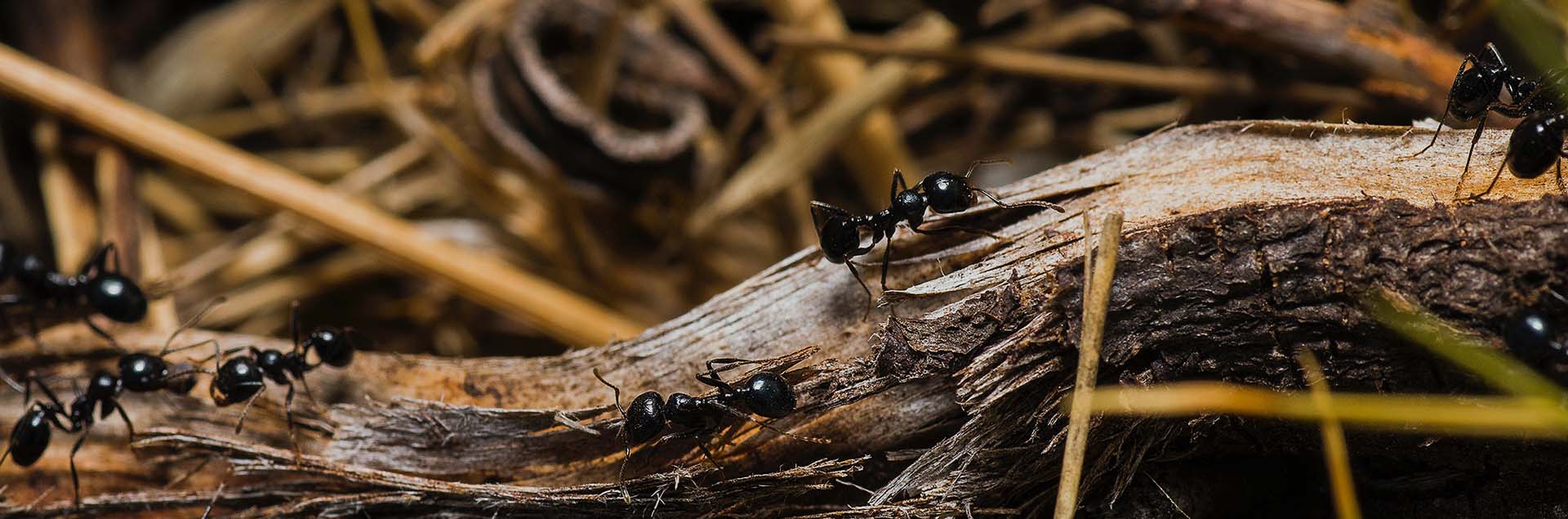
One thing that has not changed for generations in San Diego is that ants are a very common pest. Because ants are highly social, seeing one normally means there are more nearby. Ants can establish multiple colonies, and their queens can lay up to 800 eggs per day while living for more than 10 years.

For these reasons, a proper treatment plan must control not only the ants you see but also where they originate: the colony. Only by addressing both can effective control be achieved.

We will be happy to help control your ant problem.

Call (619) 421 - 2101 →
Identification guide

Types of Ants Found in San Diego

Most common

Argentine Ants

Argentine ants are the most common ants found in San Diego and throughout California. If you notice an ant roaming around or a trail leading into a structure, it will most likely be Argentine ants. They are about 1/8 inch long and commonly black or dark brown.

Exterior nesting

Odorous House Ants

Odorous house ants are no longer as common in San Diego because Argentine ants have largely displaced them. They get their name from the odor released when they are crushed or stepped on. They prefer exterior nests beneath items on the ground and can create multiple subcolonies, making them harder to control. They can now be found in Northern California and Washington state.

Stinging ant

Fire Ants

Fire ants are very common in San Diego open spaces. They deliver a sting commonly described as similar to a bee sting. Their size varies from 1/8 inch to 3/8 inch, and they have reddish-brown coloration.

Wood destroying organism

Carpenter Ants

Carpenter ants are wood destroying organisms that carve openings in structural wood to create their nests. Although uncommon in San Diego, they can still be found in timber structures, trees, and other wood. They vary in size, can grow as large as 5/8 inch, and are most commonly black.

Treatment options

Ant Control Methods

01

Chemical Spray

A liquid chemical spray is one of the oldest and most effective methods of controlling ants. It is most commonly used on landscaping and around property exteriors. Because the chemical is sprayed directly onto surfaces, however, it results in more chemical contact with the treated area.

02

Gel Bait

Gel bait is one of the most common treatment methods used inside homes and commercial properties such as restaurants, offices, and other busy areas. Worker ants consume the gel and carry it back to share with the colony, providing a high extermination rate that targets both visible workers and the colony in a short period of time.

03

Organic Pesticides

Environmentally friendly and organic solutions are also available. Pesticides based on borax, lemon juice, peppermint, cinnamon, and other organic materials can provide local control. Because these pesticides do not contain the chemicals necessary to be transported back to the colony, they control only the sprayed areas rather than the entire colony.

Prevent future activity

Pesticide-Free Prevention Tips

Reduce the conditions that attract ants and give them access to your structure with these practical prevention steps.

  1. 01Make sure your sprinklers are not directed toward your structure.
  2. 02Seal all visible cracks on the exterior of your structure.
  3. 03Clear cellulose debris such as tree branches, firewood, and trimmings, or keep them away from the structure.
  4. 04Keep landscaping mulch at least 18 inches away from the structure.
  5. 05Eliminate piles of trash, bricks, rocks, debris, and similar materials.

Stop ants from bugging you.

If you want to ensure the ants in your house will no longer be a problem, one of our professional and experienced technicians can exterminate them.

Targeted Treatment Colony Control Prevention Guidance
Call Now (619) 421 - 2101
Service area

Areas We Serve

(619) 421-2101