


Rodent Inspection
Look for droppings, gnawing, rub marks, tracks, nests, burrows, food sources, and openings to identify the likely species and extent of activity.
Find how rodents are getting inside, address the active population, and protect your San Diego property with a practical exclusion and prevention plan.
Call (619) 421 - 2101Rats and mice enter homes and businesses in search of food, water, shelter, and protected nesting sites. Once indoors, they can contaminate stored food, damage packages, soil insulation, and gnaw wiring or building materials. An effective response identifies the rodent, follows the evidence to its nesting and travel areas, and corrects the conditions that allowed it to enter.
GC Termite Control provides professional rodent inspection, control, exclusion, dead-rodent removal, and odor or sanitation services throughout greater San Diego. The appropriate combination depends on the species, property, activity level, access points, and whether rodents are already living inside. The goal is a durable plan built around inspection and follow-up—not a one-size-fits-all pesticide application.
Hearing or seeing rodent activity?
Call (619) 421 - 2101 →Homes, restaurants, offices, storage buildings, and other properties can require different solutions. Inspection findings determine which services belong in the plan.
Look for droppings, gnawing, rub marks, tracks, nests, burrows, food sources, and openings to identify the likely species and extent of activity.
Select traps or other properly labeled control tools for the confirmed rodent, location, and risks around people, pets, and wildlife.
Seal practical entry points with durable materials and recommend structural or landscape changes that reduce future access.
Evaluate accessible areas for a carcass, remove it with appropriate precautions when feasible, and identify related sanitation needs.
Address accessible waste and contaminated materials, then recommend cleaning, disinfection, deodorizing, or replacement based on site conditions.
Body shape, tail length, nesting height, droppings, and travel patterns help distinguish one rodent from another. Correct identification matters because roof rats, Norway rats, and house mice use buildings differently.
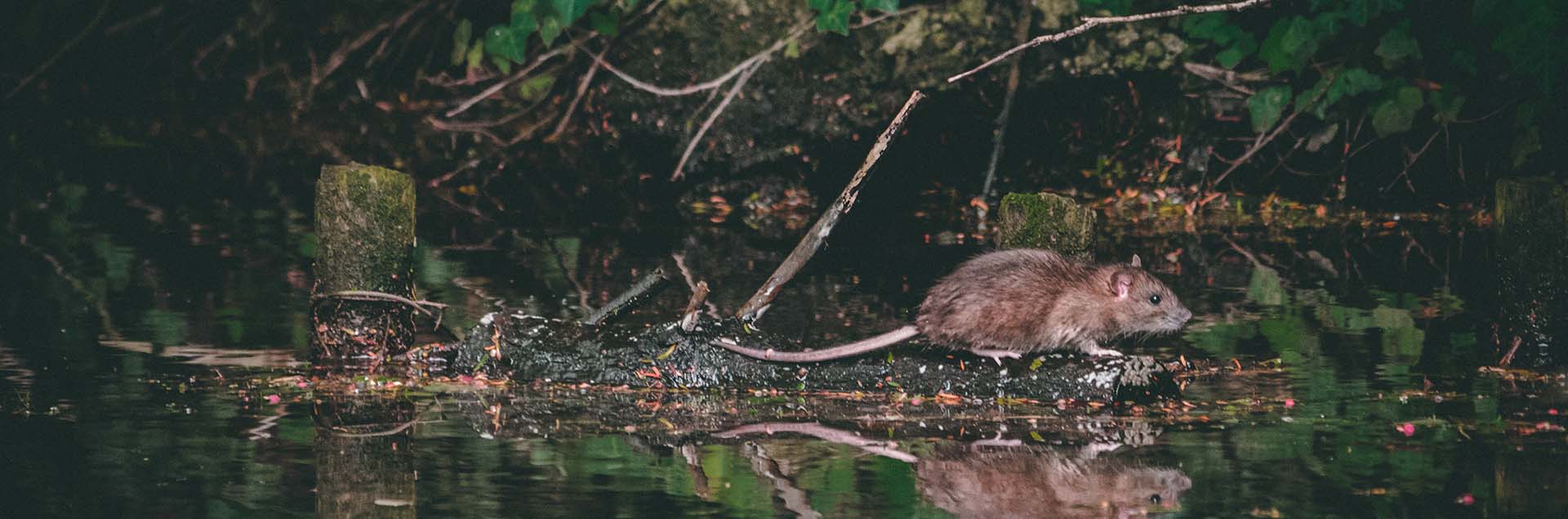
Roof rats are slender, agile climbers with large ears, a pointed muzzle, and a tail that is typically longer than the head and body. Their fur ranges from brown to very dark gray or black.
Norway rats are larger and stockier than roof rats, with a blunt muzzle, relatively small ears, coarse brown or gray fur, and a tail usually shorter than the head and body.
House mice are small gray or brown rodents with a pointed muzzle, prominent ears, and a thin tail. They adapt readily to urban and rural buildings and can establish themselves close to food.
Rodents have ecological roles, and house mice have contributed extensively to scientific research. Those broader roles do not make commensal rats or mice acceptable inside an occupied building, where contamination and property damage require attention.
One observation rarely tells the whole story. The location, age, and concentration of several signs help reveal active routes, feeding areas, and possible nesting sites.
Waste near food, cabinets, shelves, wall edges, or nesting areas can indicate repeated activity and a sanitation concern.
Fresh marks on packages, wood, plastic, doors, pipes, or wiring can help locate travel and feeding zones.
Dark smudges along walls, baseboards, beams, or openings can develop where rodents repeatedly follow the same route.
Scratching, scurrying, or gnawing in ceilings, walls, attics, cabinets, or crawlspaces may reveal concealed activity.
Shredded paper or insulation suggests nesting, while ground holes and worn runways may point to Norway rats.
Gaps around doors, vents, pipes, eaves, foundations, and utility lines provide clues about how rodents are entering.
Soiled insulation, nesting debris, gnawed food, and damaged stored items can show how far activity has spread.
Rodent-associated fleas or a persistent odor can accompany an active nest, inaccessible waste, or a dead rodent.
More than 2,000 rodent species exist worldwide, but that does not mean every rodent carries every disease. Risk varies by species, geography, parasites, and the type of contact with waste, contaminated food, water, or nesting material.
Plague is caused by Yersinia pestis and is most often associated with infected fleas and susceptible wild rodents. It is not the same disease as murine typhus.
Murine typhus is caused by a different bacterium and can be associated with infected fleas carried by rats, opossums, cats, or other hosts.
Rodent waste can contaminate food, preparation areas, soil, or water. Avoid direct contact and use appropriate cleanup precautions.
Rat-bite fever, LCMV, and tularemia can involve particular rodents or exposure routes. A house mouse should not be described as carrying every rodent disease.
U.S. hantavirus infections are associated primarily with certain wild rodents, including deer mice—not with house mice as a general rule. Any unidentified wild rodent and its waste should still be handled cautiously.
Ventilate the area when appropriate, keep people and pets away, wear protective gloves, and wet droppings, urine, and nesting material thoroughly with an appropriate disinfectant before wiping them up. Heavy contamination, enclosed spaces, or extensive nesting can require additional precautions and professional help.
Read the CDC rodent-cleanup instructions →Medical note: Pest-control information is not medical advice. Contact a healthcare provider or local public-health agency if you are concerned about a bite, exposure, or symptoms.
A mouse can use an opening roughly 1/4 inch wide, while rats use larger defects and routes. Openings must be evaluated in context so active animals are not accidentally sealed inside.
Check roof returns, fascia gaps, attic vents, damaged screening, tiles, and overhanging branches used by climbing roof rats.
Inspect cable, electrical, conduit, and service penetrations as well as utility lines that lead toward roofs or upper walls.
Look around plumbing, HVAC lines, exhaust vents, crawlspace vents, and openings below sinks or behind equipment.
Review door sweeps, garage corners, thresholds, screens, frames, and loading or service doors for daylight and worn gaps.
Trace cracks, crawlspace access, slab penetrations, damaged grates, burrows, and sheltered routes beside foundations.
Identify dense shrubs, vines, debris, boxes, and firewood that conceal activity or help rodents reach the building.
Durable repairs matter. Depending on the opening, exclusion may use properly secured metal mesh or hardware cloth, flashing, mortar, appropriate sealants, door sweeps, or combinations of materials. Loose steel wool or caulk alone may not withstand persistent gnawing or movement.
Exclusion is strongest when the property no longer offers easy food or concealed nesting space. These six maintenance habits also make new activity easier to detect.
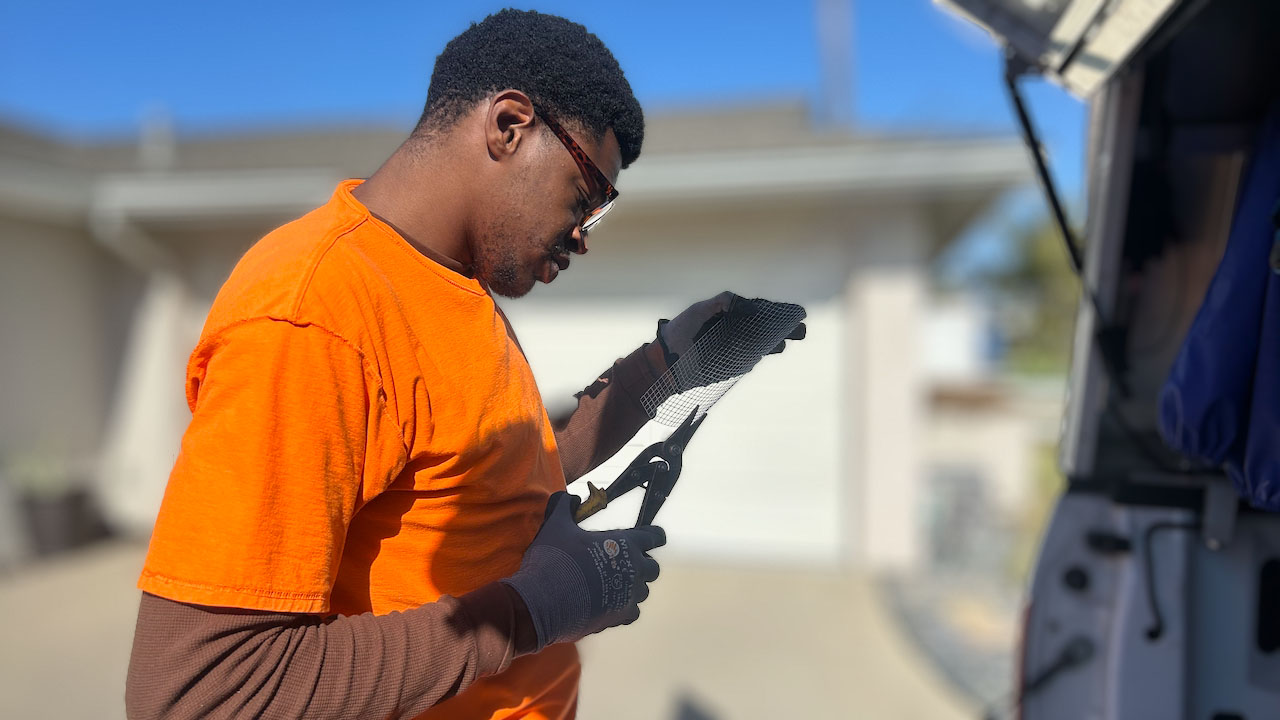 Rodent exclusion in progress
Exclusion is coordinated with control so animals are not trapped inside walls, attics, or other voids. The exact repair list depends on access, construction, species, and the condition of the building.
Identify entry points, nesting areas, travel routes, attractants, and signs of current activity.
Close practical access points with durable, appropriately secured materials after planning for active rodents.
Recommend landscape, storage, sanitation, and structural improvements that reduce future access.
Evaluate accessible waste, odors, nesting debris, and damaged material for safe cleanup or replacement.
Reinspect when needed, track new evidence, maintain repairs, and adjust the plan if activity continues.
Control, exclusion, sanitation, and monitoring work together. Device placement and timing should respond to rodent evidence while protecting occupants, pets, and non-target wildlife.
Properly selected traps can be placed along confirmed runways and in active attics, cabinets, kitchens, or interior spaces where occupants and pets cannot reach them. Placement, bait choice, spacing, and frequent inspection are adjusted to the species and response.
Enclosed or secured devices may be appropriate in sensitive locations. Captured rodents and contaminated devices require careful handling and disposal.
Rodenticide is not necessary for every property. When warranted—often in selected exterior areas—it must be used exactly according to the product label and secured in an appropriate tamper-resistant bait station.
Stations must be inaccessible to children and pets. Placement must also consider wildlife, spilled bait, carcass retrieval, and secondary poisoning. No fixed number of feedings or completion date applies to every infestation.
Glue boards are sometimes marketed for narrow areas around plumbing or as insect-monitoring devices, but they are not the default rodent tool recommended here. They can capture non-target animals and require frequent inspection.
CDC hantavirus guidance advises against glue and live traps in relevant exposure settings because a frightened rodent may urinate. Suitable snap traps or professionally selected enclosed devices are generally preferred.
No method guarantees that every rodent is removed immediately or that a property can never be reinvaded. Results depend on finding activity, removing accessible rodents, correcting entries and attractants, maintaining repairs, and following up when new evidence appears.
Review EPA rodent-control options →An occasional exterior sighting is different from established indoor activity. A professional inspection can connect scattered evidence and prioritize the repairs or control work that matters most.
Schedule an InspectionBody size, droppings, gnaw marks, tail and ear proportions, nesting height, and travel patterns provide clues. A professional inspection evaluates several signs together instead of relying on one dropping or sound.
A house mouse can use a gap roughly 1/4 inch wide. Inspect penetrations and transitions throughout the building, because a small opening can widen where material is weak or damaged.
Sealing every opening without accounting for active animals can trap rodents inside. Control and exclusion are sequenced from inspection findings so access is corrected without creating a new problem in a wall or attic.
Do not vacuum or sweep dry rodent waste. Wet it thoroughly with an appropriate disinfectant and follow current CDC cleanup precautions. Extensive contamination may require professional evaluation.
A bait station reduces access but does not remove all risk. Any rodenticide must remain in a correctly selected tamper-resistant station, be placed according to the label, and be kept inaccessible to children, pets, and non-target wildlife.
Odor can develop when a carcass is inside an attic, crawlspace, wall void, cabinet, or other concealed area. Accessible carcasses can sometimes be removed and the area sanitized; inaccessible conditions require an inspection and realistic expectations about access.
GC Termite Control provides professional rodent inspection, targeted control, exclusion, cleanup guidance, and prevention support for homes and businesses throughout greater San Diego.