


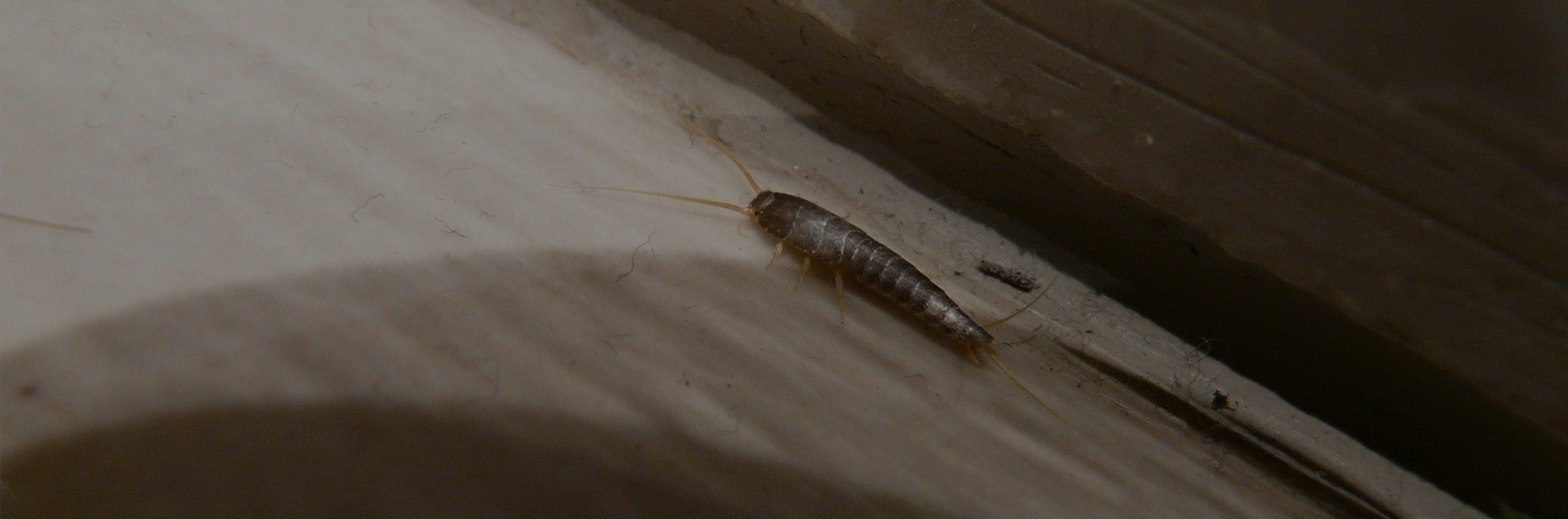
Adults are commonly around one-half inch long, although size varies with species and maturity.

Silverfish Control & Extermination Services
Trace activity back to moisture and hidden shelter, protect books and stored goods, and build a practical control plan for your San Diego property.
Call (619) 421 - 2101Silverfish control
Look Beyond the Sighting to the Conditions Supporting It
Silverfish are small, wingless insects that favor protected places where moisture, shelter, and suitable food overlap. They are common nuisance pests in San Diego homes and businesses, especially around storage, paper products, plumbing, and areas that remain damp. They do not bite or sting people, and they are not known to transmit disease. The practical concerns are contaminated stored goods, damaged paper or fabrics, and repeated sightings that can point to a moisture or storage problem.
Finding one silverfish does not prove that a large population is present. It does justify a closer look at where it was seen, whether activity repeats, and what nearby conditions could support it. A useful inspection identifies silverfish or a similar bristletail, checks dark harborages and moisture sources, looks for feeding damage, and separates an occasional visitor from established activity.
GC Termite Control provides professional silverfish inspection and recommendations for homes and businesses throughout greater San Diego. Our technician evaluates the evidence and property conditions, explains which corrections matter, and recommends targeted control when it is warranted.
Seeing silverfish or unexplained paper damage?
Call (619) 421 - 2101 →The flattened body is broader near the head and narrows toward the rear beneath silvery scales.
Two antennae project forward, while three bristle-like abdominal filaments extend from the rear.
Silverfish usually hide by day and move quickly across floors, walls, or stored materials at night.
Simple metamorphosis
A Three-Stage Lifecycle Without a Pupal Stage
Silverfish belong to an ancient lineage of wingless insects. Their development, egg production, molting frequency, and lifespan vary with species, temperature, humidity, food, and other conditions.
Egg
Females place small eggs in protected cracks, crevices, dust, cloth, food material, or other sheltered sites. Development can be much slower in cool or unfavorable conditions.
Nymph
Young silverfish resemble small, pale adults. Scales and the familiar silver-gray appearance become more noticeable as the insect grows through repeated molts.
Adult
Unlike most household insects, silverfish continue to molt after reaching adulthood and can survive for multiple years when shelter, food, and moisture remain favorable.
Natural history, placed in context
Related bristletails occupy caves, soil, leaf litter, and other natural habitats, and some species associate with ant or termite nests. Household silverfish, however, should be evaluated through the conditions found at the property rather than assumed to be connected to a hidden ant or termite colony.
Compare the bristletails
Silverfish or Firebrat?
These related insects have similar body shapes but favor different environments. Correct identification helps focus the inspection on the right moisture and temperature conditions.
Cooler, damp areas
Silverfish Lepisma saccharina
Common silverfish are usually shiny silver, pearl gray, or blue-gray. Look in laundry rooms, bathrooms, basements, crawlspaces, closets, wall voids, and protected storage where humidity or condensation persists.
- Smooth silver-gray scales
- Often associated with paper and stored materials
- Favored by damp, protected harborages
Hotter utility areas
Firebrat Thermobia domestica
Firebrats have a more mottled gray or brown appearance and favor hotter locations. Inspection may concentrate near furnaces, boilers, ovens, hot-water pipes, heating equipment, commercial kitchens, or warm attics.
- Mottled rather than uniformly silver
- Associated with unusually warm locations
- May require a different inspection path
Property moisture map
Where Silverfish Hide Inside and Out
Darkness alone is not enough. The most useful inspection connects shelter with moisture, food, nearby openings, and visible evidence.
Interior zones
01
02
03
04
05
Attics & Insulation
Protected edges, roof leaks, condensation, and stored paper can support concealed activity.
Boxes, Books & Papers
Cardboard boxes, books, and papers offer shelter and starches or adhesives that silverfish can graze.
Bathrooms & Laundry
Leaks, condensation, damp cabinets, and pipe gaps can create favorable conditions near plumbing.
Basements & Crawlspaces
Limited airflow, damp materials, and narrow voids provide moisture and low-disturbance harborage.
Closets, Kitchens & Voids
Bookcases, pantry edges, wall voids, baseboards, and pipe penetrations can link food to shelter.
Exterior zones
06
07
08
09
Mulch
Deep or constantly damp mulch against a foundation can hold moisture and shelter small insects.
Leaf Piles
Left-behind leaves trap moisture and organic debris near walls, doors, and foundation openings.
Weedy Soil
Dense weeds and unmanaged soil edges can reduce airflow and hide damp exterior conditions.
Excessive Moisture
Irrigation, drainage, plumbing, or grading problems can keep foundation areas persistently damp.
Why are silverfish in a sink or bathtub?
A silverfish can wander or fall onto a smooth fixture and become unable to climb out. That sighting does not, by itself, mean the insect traveled through the drain. Check nearby plumbing gaps, cabinets, baseboards, and moisture sources instead of treating the drain automatically.
Damage detective
Read the Evidence on Paper, Fabric, and Food
Silverfish have weak jaws and usually scrape or graze a surface instead of taking a clean bite. Damage tends to develop gradually in quiet storage rather than appearing as structural destruction.
Books & Pages
Look for surface scraping, notched book edges, irregular holes in pages, missing print, shed scales, or spotting along bindings and stored stacks.
Adhesives & Cardboard
Bookbinding glue, wallpaper paste, labels, envelopes, and corrugated cardboard contain materials that can attract feeding silverfish.
Fabrics & Stored Items
Starched or soiled natural and synthetic fabrics may be grazed, especially when boxes or textiles remain undisturbed in a humid area.
Dry Foods
Cereals, flour, pasta, pet food, crumbs, and other dry stored products can provide food. Discard contaminated products and clean the surrounding shelf.
Dust & Debris
Household dust, dead insects, fungi, and organic debris can sustain activity in narrow cracks even when obvious food is unavailable.
Not Structural Termites
Silverfish can damage valued materials and contaminate stored goods, but they do not consume structural wood like termites. Identification prevents the wrong treatment response.
Why activity returns
Follow the Conditions Behind the Sighting
A single silverfish is a reason to inspect and monitor, not proof of a major infestation. Repeated evidence becomes more meaningful when the same moisture and shelter remain available.
Moisture Begins
A leak, condensation, irrigation issue, or damp exterior zone raises local humidity.
Harborage Protects
A crack, void, box, bookcase, or insulation creates a narrow and undisturbed shelter.
Food Sustains
Paper adhesive, starch, crumbs, pet food, dust, or dead insects support feeding.
Evidence Appears
Night sightings, scales, grazing, holes, or trapped insects reveal continuing activity.
Prevention checklist
Make the Property Less Favorable
Silverfish can survive for long periods with little food, so removing one food source is rarely enough. Combine moisture correction, cleaner storage, exclusion, and monitoring.
- 01Fix water leaks. Repair dripping plumbing, roof leaks, appliance connections, and other water sources, then dry affected materials.
- 02Correct exterior harborage. Thin, move, or replace moisture-holding mulch where inspection shows it contributes; clear leaf piles and excessive weeds near the foundation.
- 03Dry damp areas. Improve ventilation, drainage, or dehumidification in bathrooms, laundry rooms, crawlspaces, basements, attics, and storage.
- 04Seal practical openings. Close appropriate cracks and crevices around siding, vents, pipes, baseboards, cabinets, and utility penetrations without blocking required airflow.
- 05Restrict food access. Store cereals, flour, pasta, pet food, and other dry goods in intact, tightly sealed containers and clean spills promptly.
- 06Improve paper storage. Reduce cardboard clutter, vacuum dust and debris, and keep important books, papers, and sealed boxes protected and off damp floors.
Professional process
A Five-Step Silverfish Control Plan
The service plan should reflect the species, affected materials, moisture conditions, access, and activity level found during inspection.
Inspect & Identify
Confirm silverfish or firebrats and examine sightings, feeding evidence, shed scales, and likely travel routes.
Map the Conditions
Connect activity to leaks, humidity, dry food, paper storage, dust, cracks, voids, and exterior harborage.
Correct the Source
Prioritize moisture repair, cleaning, secure storage, clutter reduction, and practical exclusion recommendations.
Target the Harborage
Use nonchemical tools first and apply a properly labeled treatment only where findings show it is appropriate.
Monitor & Follow Up
Track activity after corrections, reassess persistent zones, and refine recommendations when new evidence appears.
Treatment decisions
Match the Tool to the Evidence
Light or occasional silverfish activity often improves without pesticide treatment. Larger or persistent problems still require moisture, food, and harborage corrections for lasting reduction.
Moisture, Cleaning & Exclusion
Drying, vacuuming, organizing storage, sealing practical gaps, and protecting food and paper remove the conditions that keep activity going.
Sticky Monitors
Monitors placed along edges and near suspected harborages can reveal where activity continues. They support inspection but do not correct the source alone.
Targeted Crack-and-Crevice Treatment
An appropriately labeled product may be used in confirmed cracks, crevices, baseboard edges, closets, pipe penetrations, or other permitted harborages.
Labeled Void Treatment
A suitable dust or other formulation may be considered for permitted dry wall voids and inaccessible spaces. Thick exposed deposits and broad occupied-surface applications are inappropriate.
Use products safely: Never apply a pesticide to books, food, water, sinks, drains, or food-contact surfaces unless the label expressly permits that use. Follow every application-site, ventilation, re-entry, child, and pet precaution on the label. Total-release applications do not solve hidden moisture and harborage conditions. Review EPA label guidance →
When to call
When Professional Silverfish Control Makes Sense
Professional inspection is useful when the insect or source remains uncertain, valued materials are at risk, or conditions extend into places that are difficult to inspect safely.
- Sightings repeat during the day, across several rooms, or after routine cleaning and drying.
- Books, documents, artwork, fabrics, stored food, or other valued materials show active damage.
- Moisture or activity appears connected to wall voids, insulation, crawlspaces, attics, or inaccessible storage.
- A library, archive, office, commercial pantry, storage facility, or other sensitive environment needs a documented plan.
- The insect could be a firebrat or another pest requiring a different inspection and control approach.
Common questions
Silverfish Control FAQ
Do silverfish bite people or spread disease?
Silverfish do not bite or sting people and are not known to transmit disease. They are mainly nuisance and material-damage pests, although their presence in food or food storage can create a contamination concern.
Are silverfish coming through my sink or bathtub drain?
Usually, a silverfish seen in a smooth sink or tub has fallen in and cannot climb back out. Inspect nearby plumbing gaps, cabinets, baseboards, leaks, and humidity before assuming the drain is the source.
How are silverfish different from firebrats?
Silverfish are generally smooth silver-gray insects associated with damp protected areas. Firebrats are more mottled and favor hotter locations near heating equipment, hot pipes, ovens, or very warm attics.
What materials can silverfish damage?
Silverfish can graze paper, bookbinding glue, wallpaper paste, labels, cardboard, starched or soiled fabrics, and dry stored products. Books may show scraped surfaces, notched edges, or irregular holes.
Will a dehumidifier solve the problem by itself?
Reducing humidity can make an area less favorable, but hidden leaks, food, dust, cardboard, cracks, and connected voids may still support activity. Combine drying with sanitation, storage, exclusion, and monitoring.
How long does silverfish control take?
Timing depends on the extent of activity, access to harborages, moisture correction, and customer preparation. Because silverfish hide in protected spaces and develop at different rates, continued monitoring and follow-up can be necessary.
Trusted information
Silverfish Identification and Management Resources
University of California IPMSilverfish and FirebratsRead California guidance →
Virginia Cooperative ExtensionBristletail Identification and ControlReview the field guide →
Penn State ExtensionBristletails: Silverfish and FirebratsExplore management guidance →
U.S. Environmental Protection AgencyPest-Control Do's and Don'tsReview EPA safety guidance →
Ready to find the source of recurring silverfish activity?
GC Termite Control can inspect the evidence, identify moisture and harborage conditions, and recommend practical prevention and targeted control for your San Diego property.
Professional Inspection•Moisture-Based Plan•Targeted Control